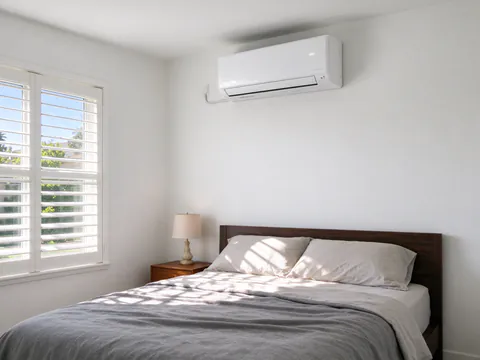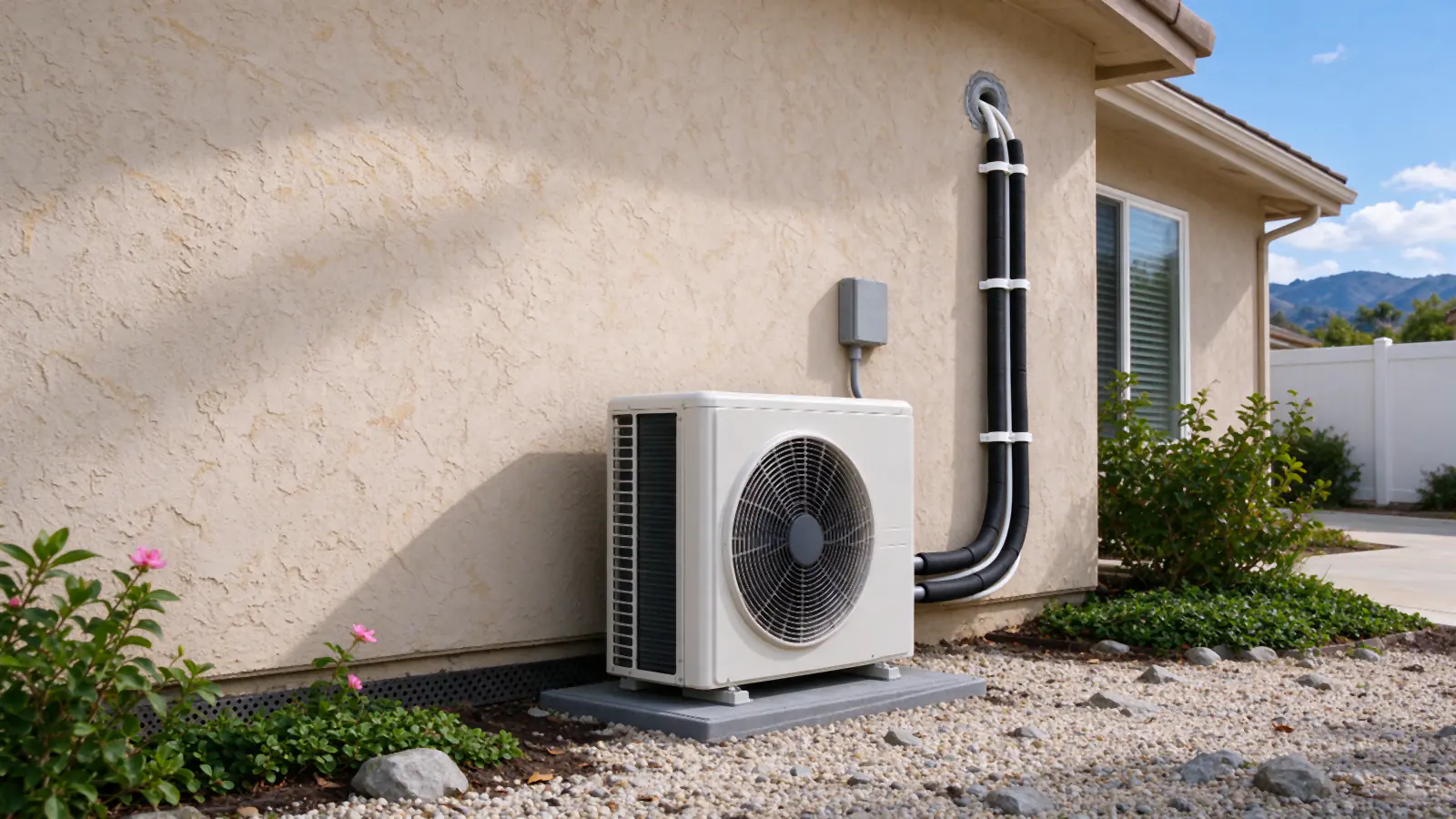
Yes. The California Energy Commission says installing any space-conditioning appliance other than a plug-in room unit requires a building permit, and that includes a do-it-yourself mini split connected on site. In the City of San Diego, a mini split at a house or duplex is normally a no-plan combination permit, with the mechanical fee starting at $176.57.
Mesa Mini Split San Diego installs ductless mini splits across San Diego County, with the work done by licensed and insured contractors holding the California C-20 (HVAC) license. On its jobs the contractors pull the City permit and coordinate the inspections as part of the work. This guide explains what the permit covers, who issues it in each part of the county, what the inspection and the State’s field verification check, and what changes when SB 222 takes effect.
What state law and the Energy Code require
California’s Energy Code, Title 24 Part 6, governs how efficiently a building uses energy, and a new mini split is an alteration under it. Buildings whose permit applications are filed on or after January 1, 2026 follow the 2025 edition. The CEC’s single-family HVAC guidance spells out what that means:
- Installing a space-conditioning appliance other than a plug-in room appliance requires a building permit. A factory-charged “DIY” split system connected on site is still an alteration.
- New HVAC systems require load calculations, the room-by-room method described in the sizing guide.
- Field verification and diagnostic testing is prescriptively required for most HVAC additions and alterations.
- Removing old equipment, as on a mini split replacement, requires refrigerant recovery by a technician certified under EPA Section 608 (Type II or Universal).
The required checks for a given project are listed on its compliance form, the CF1R. The independent inspector who performs them was called a HERS rater for years; the current edition of the code renames the role Energy Code Compliance (ECC) rater.
Refrigerant charge verification by climate zone
The single check that matters most for a mini split is refrigerant charge verification, which confirms the system holds the amount of refrigerant it was designed for. Too little or too much refrigerant cuts capacity and efficiency and strains the compressor. The CEC requires it prescriptively for new heat pumps in every climate zone, and for cooling-only air conditioners in zones 2 and 8 through 15.
| Coastal San Diego (climate zone 7) | Inland valleys (climate zone 10) | |
|---|---|---|
| Heat pump mini split (heats and cools) | Charge verification required | Charge verification required |
| Cooling-only mini split | Not prescriptively required | Charge verification required |
Coast, Mid-City and Clairemont fall mostly in zone 7 on the CEC’s climate zone map; Rancho Bernardo, Scripps Ranch, El Cajon, Santee, Escondido, San Marcos, Poway and Ramona fall in zone 10. The City of San Diego spans both, so the zone is confirmed for each address. Since almost every mini split sold for homes is a heat pump, verification is the normal case everywhere; the coastal vs inland guide covers the other differences between the zones.
City of San Diego: the no-plan combination permit
Development Services’ “What Permits Do I Need?” fact sheet lists a mini split system (condenser unit or heat pump, and air handler) among the installations that do not need plans but do need a permit when installed or replaced in single-family homes and duplexes. Repair-only work needs no permit. Single dwellings, duplexes and townhomes apply online under the record type “No-Plan - Residential - Combination Mech/Elec/Plum”, which covers the mechanical and electrical work in one permit.
Fees come from Information Bulletin 103:
| Item | Published City fee |
|---|---|
| Air Handler, Mini-Split: first unit | $176.57 |
| Each additional mini-split unit | $52.39 |
| Condensing Unit for HVAC, each | $131.52 (whether it is charged alongside the mini-split item is set when the permit is issued) |
| New circuits, 15 to 45 amps, first five | $176.57 |
| Panel replacement or upgrade up to 200 amps | $176.57 |
| Mapping fee, only when plans are used | $12.16 |
So a mini split permit in the City starts at $176.57, and the exact total for a given system is set at issuance. The installation cost guide shows where the permit sits in an overall budget.
When the City requires plans instead
Several conditions move a job off the no-plan path:
- Historic properties. Simple no-plan permits are for properties that are not historically designated or potentially designated. Designated resources and projects in historic districts need a standalone permit with plans and a historical resource review under Information Bulletin 581. That applies in designated districts such as South Park in Golden Hill and Valle Vista Terrace in North Park, covered on the North Park, Uptown and Mid-City page.
- Structural mounting. Plans and a building permit are needed when the supporting structure must be altered to carry the equipment, when special inspections are required other than for post-installed anchors, and in some cases for equipment on a new pad on grade outside the building’s footprint or weighing over 2,500 pounds. Structural calculations apply to equipment over 400 pounds or with its center of gravity more than 4 feet above its base. Roof stands and wall brackets deserve a check before the quote; the bulletin’s wording on new pads is confirmed with Development Services for the specific project.
- Buildings beyond houses, duplexes and townhouses. The simple permit path is written for those building types. Condos in larger buildings and commercial spaces go through plan review; see condo installation and commercial installation.
Placement rules reviewed with the permit
The permit is also where outdoor unit placement meets the Municipal Code. Equipment in a required side or rear yard must sit at least 4 feet from the property line unless sound attenuation shows compliance with the City’s noise limits, which drop to 40 decibels at night at a single-family property line. In the Coastal Overlay Zone, equipment cannot go in required yards within designated view corridors, and lots on a beach or within 50 feet of a bluff edge lose the usual coastal permit exemption. The placement guide covers those rules in detail.
What the inspection covers
The City inspects the mechanical and electrical work under the permit. Where circuits are added to a single dwelling or duplex, the inspector needs a completed Electrical Circuit Card (form DS-1779). Where the compliance form calls for ECC rater verification, the rater’s results must be in before the permit can be finaled. The dedicated circuit and disconnect each outdoor unit needs are explained in the electrical requirements guide, and the installation process guide shows where the inspection falls in the job.
Unincorporated San Diego County
Addresses outside any city, such as Spring Valley, Lakeside, Ramona, Fallbrook and Alpine, permit through the County of San Diego’s Planning & Development Services, not the City. The County’s fee schedule lists a mechanical-only permit at $392 and an electrical and mechanical permit at $498. Its online services include residential permit types for an electric heat pump or AC repair or replacement and for HVAC, furnace and duct replacement. A new mini split that adds a circuit generally involves both trades.
Other cities in the county
Each incorporated city runs its own building division, and its rules and fees are confirmed for the address before the work is scheduled:
- Chula Vista issues minor residential utility permits through its Citizen Access portal and states that a permit is needed to install, replace or relocate an air conditioning condenser or air handling unit.
- Oceanside has contractors apply through eTRAKiT; its permit list names residential A/C replacement, notes that plans may be required, and does not list a new mini split separately, so the path is confirmed per project. The Oceanside page covers the city.
- Carlsbad: a City permit record for a ductless mini split shows a combined plumbing, mechanical and electrical permit with electronic review, closed by a mechanical final inspection.
- El Cajon, Escondido, San Marcos, Vista, Santee, La Mesa and the other cities issue permits through their own building divisions; requirements and fees are confirmed per address. See the El Cajon and Escondido pages.
Licenses and doing it yourself
In California, HVAC work done for hire falls under the C-20 (Warm-Air Heating, Ventilating and Air-Conditioning) classification issued by the Contractors State License Board, and a license can be checked on the CSLB’s website. Doing the work yourself does not remove the permit, the Title 24 verification or the refrigerant rules above: the CEC is explicit that a pre-charged DIY system connected on site is an alteration.
Homeowners report being told by an installer that a new system needed no permit. The City’s own pages say otherwise for installations and replacements, and the building department will confirm it. Unpermitted work tends to come up again later, for example when the house is sold.
What SB 222 changes from 2027 and 2028
SB 222 (Chapter 738, Statutes of 2026) adds a chapter to the Government Code on residential heat pump installations. It covers a single heat pump HVAC system serving one dwelling unit, applies to charter cities such as San Diego, and does not apply to new residential construction. A mini split is a heat pump, so it falls inside the law. The main dates:
| From | What changes |
|---|---|
| January 1, 2027 | Permit fee capped at $200 for a residential heat pump HVAC system, unless the city or county adopts written findings showing a higher reasonable cost; the fee must be fixed and publicly listed, with no extra charges |
| January 1, 2027 | Cities may add setbacks of no more than 3 feet in side and back yards or 10 feet in front yards, and noise standards for inverter heat pumps must sit at least 15 decibels above the limits for non-inverter equipment |
| January 1, 2027 | No permit or inspection for plug-in window air conditioners or window heat pumps that meet the law’s conditions; see the window unit guide |
| July 1, 2027 | Cities must offer asynchronous inspections, where the inspector does not need the contractor on site at the same time |
| By January 1, 2028 | Cities may require no more than one nondiscretionary permit per installation, with separate permits still allowed for panel replacement or structural work |
| By July 1, 2028 | Online, automated, real-time permits for swapouts: a new air handler and outdoor coil in the same locations as the old ones, with no new panel or structural work, where the licensed contractor certifies a Manual J load calculation |
Most mini split installations in a house that never had one are not swapouts, so they keep the standard permit path, though the fee cap still applies. How the City of San Diego will apply SB 222, including its 4-foot setback rule and its fees for multi-head systems, has not yet been published, so each job is confirmed against the rules in force when the permit is pulled. A separate law, AB 1684, limits how an HOA can restrict a cooling system from the same date.
The practical step is a site visit that identifies the jurisdiction, the climate zone and any historic or coastal triggers before the scope is written. Call or use the estimate form to book one.