Mesa Mini Split San Diego handles multi-zone and whole-home mini split installation across San Diego and San Diego County: one outdoor unit feeding two, three or more indoor heads, each with its own setpoint. The work is carried out by licensed and insured contractors holding the California C-20 (HVAC) license.
A multi-zone system fits a house where several rooms need help but not in the same way. A two-story house in Clairemont where the upstairs bedrooms hold heat and the living room does not. A Craftsman in North Park with no ducts, a wall heater and three bedrooms that have relied on box fans. A house in El Cajon or Escondido where every room gets hot in August and the owner wants heat pump heating to replace an old furnace. The design question is the same in each: how much each room needs, when it needs it and how one outdoor unit serves all of them without fighting itself. If only one room is the problem, single-zone mini split installation is simpler and often better.
Room-by-room loads come first
A multi-zone plan starts with a Manual J load calculation for each room, not a single number for the house. Two bedrooms of the same size can carry very different loads when one faces west under a hot roof and the other faces north over a garage. Each head is sized for its own room.
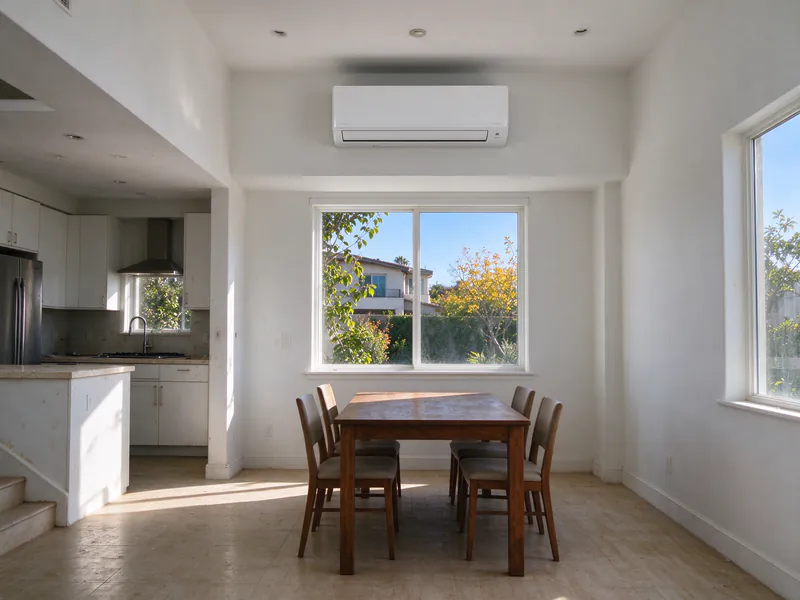
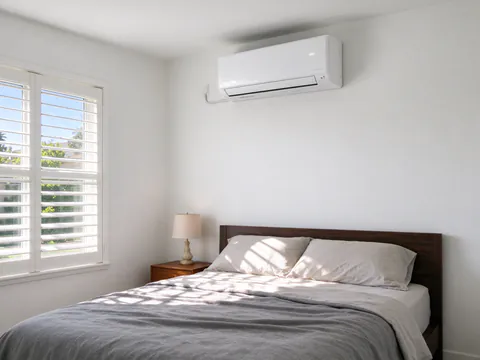
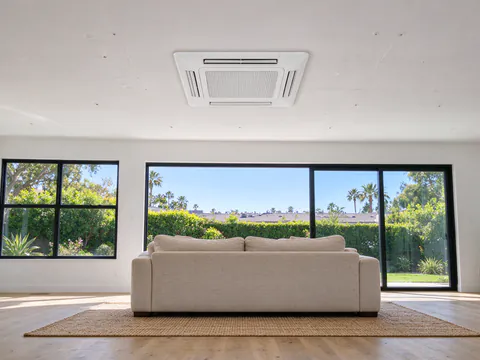
This is also where rooms get dropped. Not every room needs a head. A hallway, a small bathroom or a dining room that opens onto the living room often shares air with its neighbors, and putting a small head there adds cost and can make the whole system run worse. Doors matter too: a bedroom kept closed at night needs its own head, while an open plan can be served from one well-placed unit. The mini split sizing guide explains how room loads are built, and the indoor unit types guide covers where a wall head, a cassette or a concealed duct unit fits best.
Outdoor unit capacity, diversity and minimum output
Connected capacity versus diversity
Add up the heads and you get the connected capacity. Manufacturers allow it to exceed the outdoor unit’s rated output, within limits listed in their combination tables, because rooms rarely peak at the same time. That is diversity. East bedrooms peak in the morning, a west living room late in the afternoon, and an office only during working hours. The outdoor unit is sized for the realistic combined load at the hottest hour, not for every head running flat out at once. Get diversity wrong in the generous direction and an August afternoon in Santee finds every head asking for more than the compressor can give.
Minimum modulation and the smallest room
The opposite problem is common near the coast. On a mild night only one small bedroom head may be calling. If the outdoor unit’s lowest output is well above that room’s load, the system overshoots, shuts off and restarts, and the room never dries out. NOAA’s normals put the August mean dew point at San Diego’s Lindbergh Field at 62.5°F, so coastal rooms need long, steady run time to pull moisture out. The design checks the outdoor unit’s minimum output against the smallest likely call, and sometimes the answer is two smaller systems instead of one large one. The coastal versus inland guide shows how the same house plan shifts between climates.
One mode at a time
Most residential multi-zone heat pumps run every head in the same mode. On a spring afternoon a sunny upstairs room may want cooling while a shaded ground-floor room wants heat, and one of them waits. Where that split is a daily pattern, separate systems handle it better.
One outdoor unit or several single-zone systems
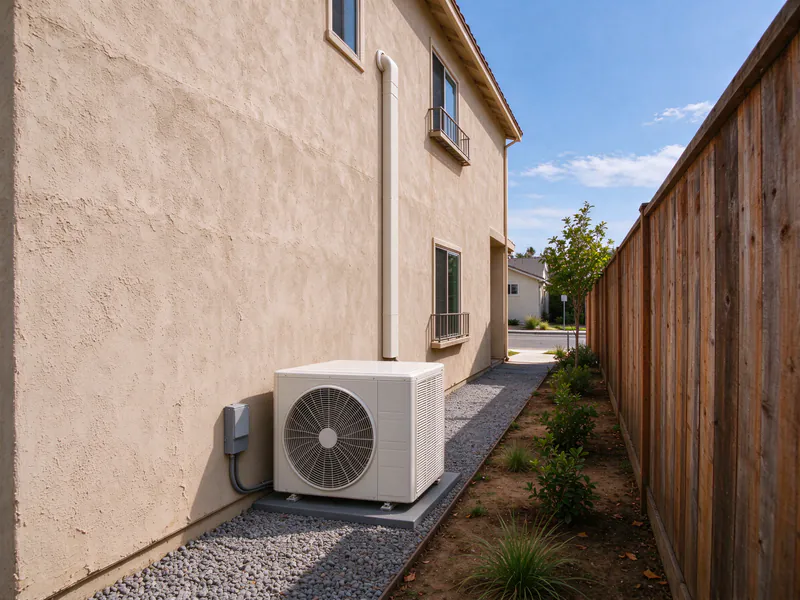
Homeowners comparing quotes report confusion here: one proposal shows a single outdoor unit for several rooms, another shows a separate outdoor unit per room, and both are presented as correct. Both can be. One outdoor unit saves side-yard space, circuits and pads, and suits rooms clustered on one side of the house. Several single-zone systems give each room its own inverter matched to its load, keep the other rooms running if one unit fails, allow heating in one room while another cools, and often carry higher efficiency ratings. They also mean more outdoor units, more circuits and more places to find on a narrow lot. The single-zone vs multi-zone guide compares the two in detail, and the placement guide covers where outdoor units can go.
Line sets, branch boxes and drains
Routing to each head
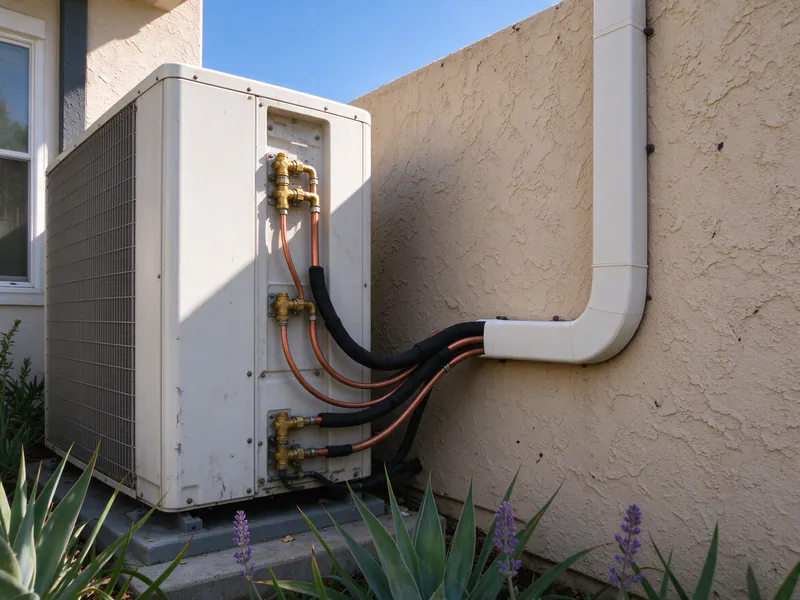
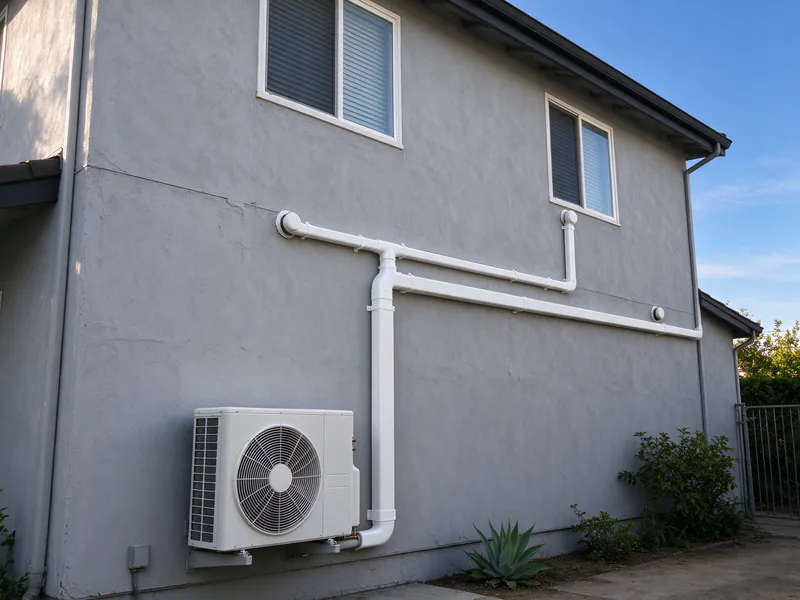
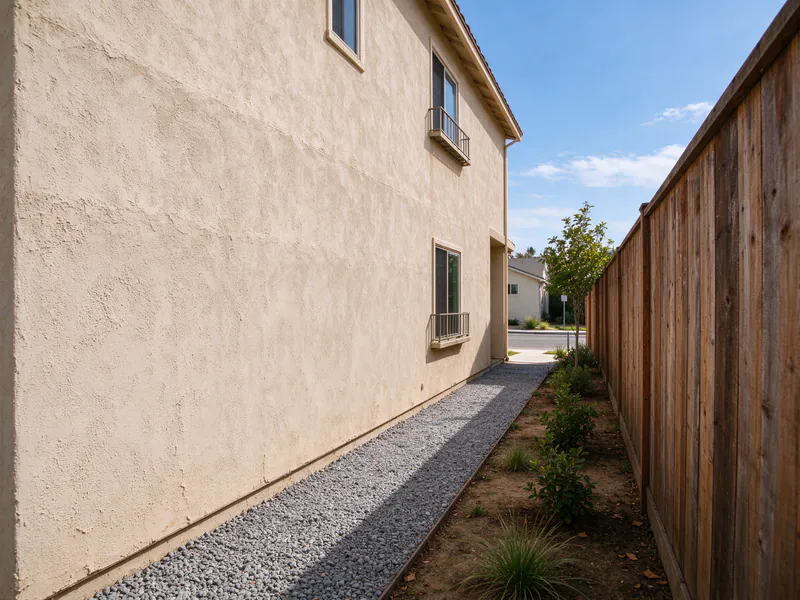
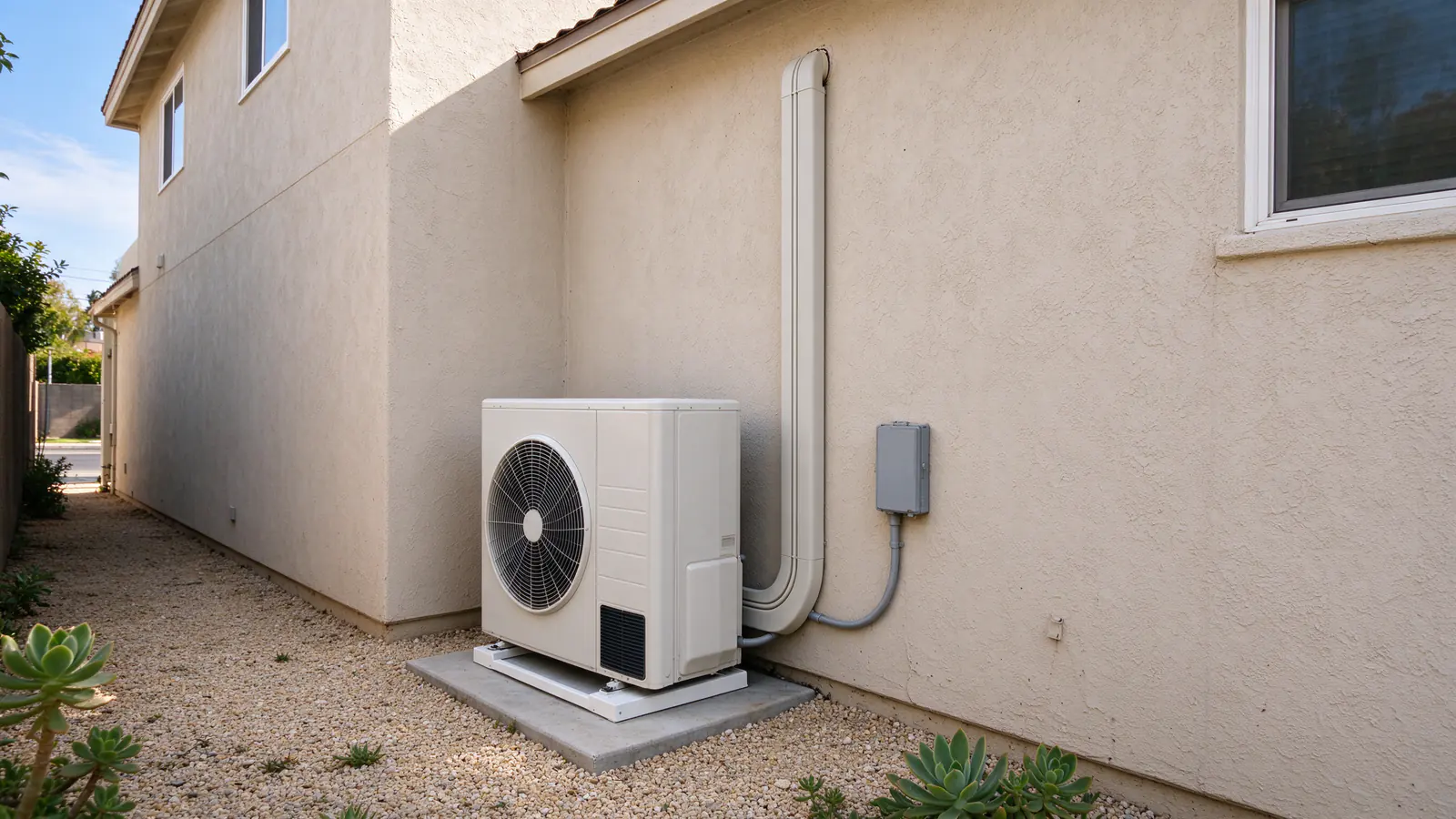
Most multi-zone outdoor units have a port for each head, and a separate pair of refrigerant lines plus a control cable runs from each port to its room. On a two-story stucco house that can mean several runs up one wall, which is where a well-planned line-hide matters: each cover should carry its own two refrigerant lines, cable and drain, run straight, and stay inside the manufacturer’s limits for total line length and the height difference between the outdoor unit and the highest head.
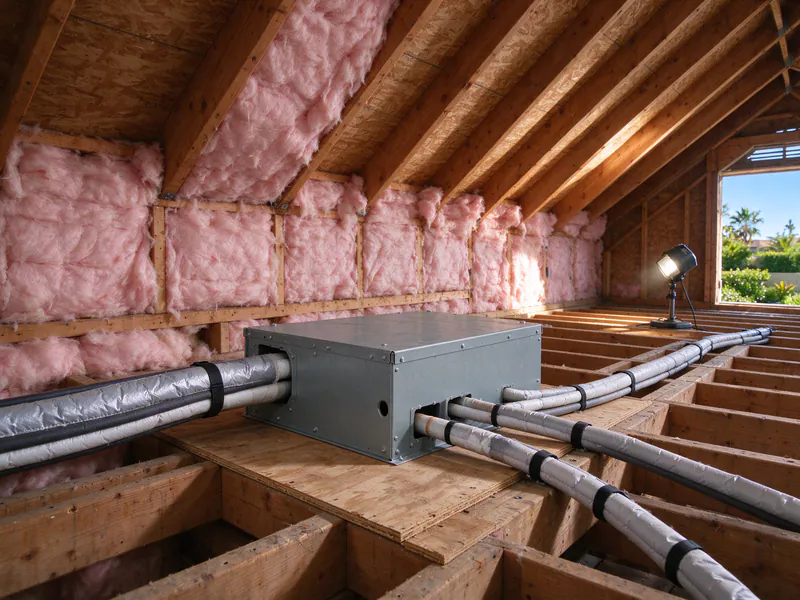
Some systems use a branch box instead: one main line set runs from the outdoor unit to a box, often in an attic or crawlspace, and short runs go from there to each head. That shortens long runs on a spread-out house but adds a component that needs access for service.
A drain for every head
Every head makes water when it cools, so a multi-zone system has as many drain problems as it has heads. An upstairs head on an exterior wall usually drains by gravity down the line-hide. A head on an interior wall, a ceiling cassette or a concealed duct unit in an attic often needs a condensate pump. The scope names the method and the discharge point for each head. The condensate drainage guide goes through the options.
Controls: remotes, wall controllers and Wi-Fi
Zone control is the point of the system: each room gets its own setpoint, fan speed and schedule. Every head comes with a handheld remote. A wired wall controller works better in rooms where remotes get lost, and some models accept a remote temperature sensor so the head reacts to the temperature where people sit rather than near the ceiling. A Wi-Fi controller adds phone control and schedules, so bedrooms can start cooling before bedtime and empty rooms can be set back. Controller options differ by manufacturer, so they are named in the written scope.
Whole-home ductless: when it makes sense
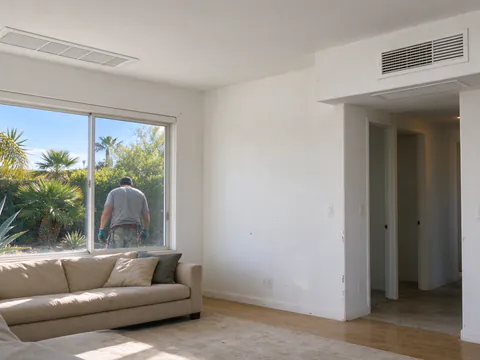
A whole-home ductless system replaces or stands in for central heating and cooling, usually with four or more heads. It makes sense in houses without ducts, or with ducts too small, leaky or badly placed to reuse. Heating is part of the decision. The California Energy Commission’s design data puts the heating design temperature at about 42 to 44°F at Lindbergh Field but about 31 to 34°F in Escondido, so inland heads and outdoor units are checked for heating capacity at the local design temperature, which varies by equipment. Whether a heat pump lowers heating bills depends on what it replaces; the operating cost guide covers SDG&E’s published rates. Where a house already has decent ducts, the mini split vs central air guide explains when a ducted system is the better answer, and concealed duct mini split installation is a middle path that serves several small rooms from one hidden air handler.
Electrical and permits
A multi-zone outdoor unit needs one dedicated 240V circuit and a disconnect, which is lighter on the panel than several single-zone systems. A whole-home system still adds a large load, and older houses with 100-amp service may need a load calculation or an upgrade. Where a 100-to-200-amp upgrade is needed, a typical San Diego-area range is about $2,800 to $5,500, before trenching, underground service or relocation. The electrical requirements guide covers panel checks.
Inside the City of San Diego, a mini split at a house or duplex is a no-plan combination permit. Development Services’ fee schedule lists $176.57 for the first mini-split air handler and $52.39 for each additional one, so a multi-zone permit starts from $176.57 and the exact total is set when the permit is issued. The contractors pull the permit and coordinate inspections as part of the work. Historic properties need plans and historical review; the permit guide covers other cities and the County.
What a multi-zone system costs
Systems with two or three heads typically run about $7,000 to $16,000 installed for San Diego-area projects, with two-head systems toward the lower part. Whole-home systems with four or more heads typically start around $13,000 and commonly run past $18,000; large premium-brand systems can exceed $30,000. These are budgeting ranges, not quotes. What moves a price: the number and style of heads, line-set lengths and line-hide, branch boxes, condensate pumps, panel work and access to the outdoor spot. The installation cost guide breaks the numbers down, and the cost estimator gives a range for your rooms.